The water treadmill (underwater treadmill) is one of the most effective tools in modern veterinary physiotherapy. It combines the benefits of treadmill exercise with the unique properties of water, so a dog can exercise safely even when ordinary effort would be too demanding. In this guide we explain how hydrotherapy works, who it helps and what a session looks like at the Multivet Active centre near Wrocław.
How does the water treadmill work?
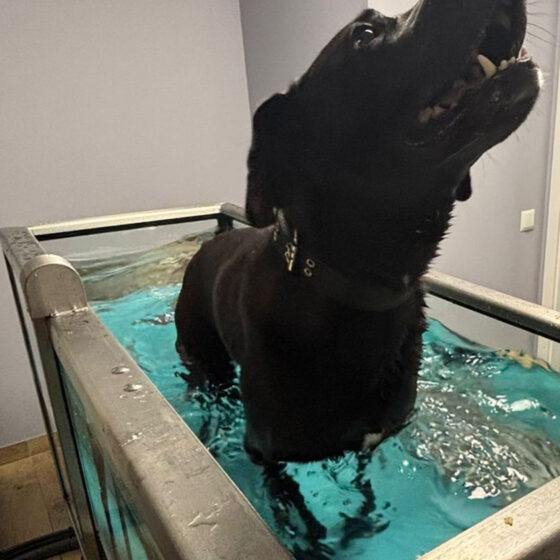
The dog walks on a belt inside a glass chamber filled with warm water. Three parameters, set individually, determine the effectiveness of the training: water level, belt speed and training time. The higher the water level, the greater the buoyancy - and so the lower the pressure on the joints and spine. At the same time water provides resistance, so the muscles work harder than during an ordinary walk.
This combination of offloading and resistance is unique. It allows training that builds muscle strength and mass while protecting the joint structures from overload. In addition, warm water relaxes the tissues, improves blood supply and increases comfort - particularly important for patients in pain.
How is it different from swimming?
When swimming, a dog works mainly with the front of its body and the movement of the hind limbs is poorly controlled. The water treadmill, however, enforces a correct, repeatable gait pattern - the dog places its steps on a stable surface and the physiotherapist can precisely observe and correct limb positioning. That is why, in orthopaedic and neurological rehabilitation, the water treadmill delivers results that swimming alone cannot.
Who does hydrotherapy help?
- dogs recovering from orthopaedic surgery (e.g. cruciate ligament surgery) and neurological surgery,
- patients with degenerative joint disease, hip or elbow dysplasia,
- animals with overweight and obesity that need a safe form of activity,
- dogs with neurological problems relearning a correct gait,
- sporting and working dogs - to build fitness and prevent injuries,
- seniors, where we want to maintain mobility and muscle mass.
What does a session look like and how to prepare?
The first visit starts with an assessment and calmly introducing the dog to the chamber. We take our time and build positive associations, often with treats. We then gradually fill the chamber with warm water and start the belt slowly. Throughout the session the dog is secured and under the physiotherapist's care. Preparation is simple: do not feed the dog just before the visit and bring a towel; if it has had surgery, bring the documentation.
What results can you expect?
We increase time and intensity gradually and set the number of sessions individually. Regular hydrotherapy improves muscle strength and mass, coordination and confidence of movement, and - in patients in pain - everyday comfort. The best results come from including the water treadmill in a wider dog rehabilitation plan, alongside manual therapy, exercise and, where indicated, INDIBA therapy.
Want to check whether hydrotherapy could help your dog? Learn more about the water treadmill for dogs or read how dog rehabilitation after surgery works.