Dog rehabilitation in Wrocław
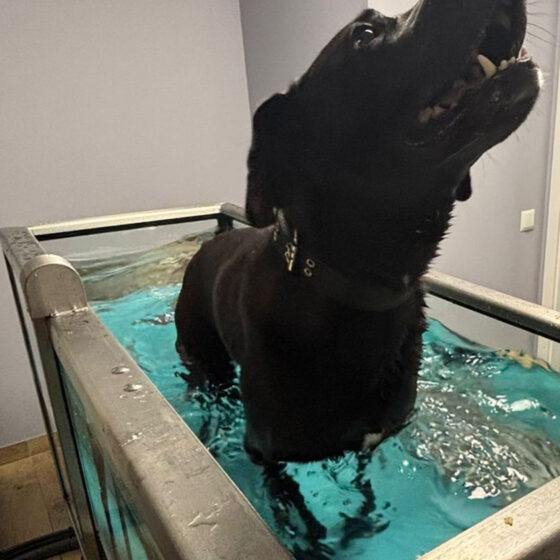
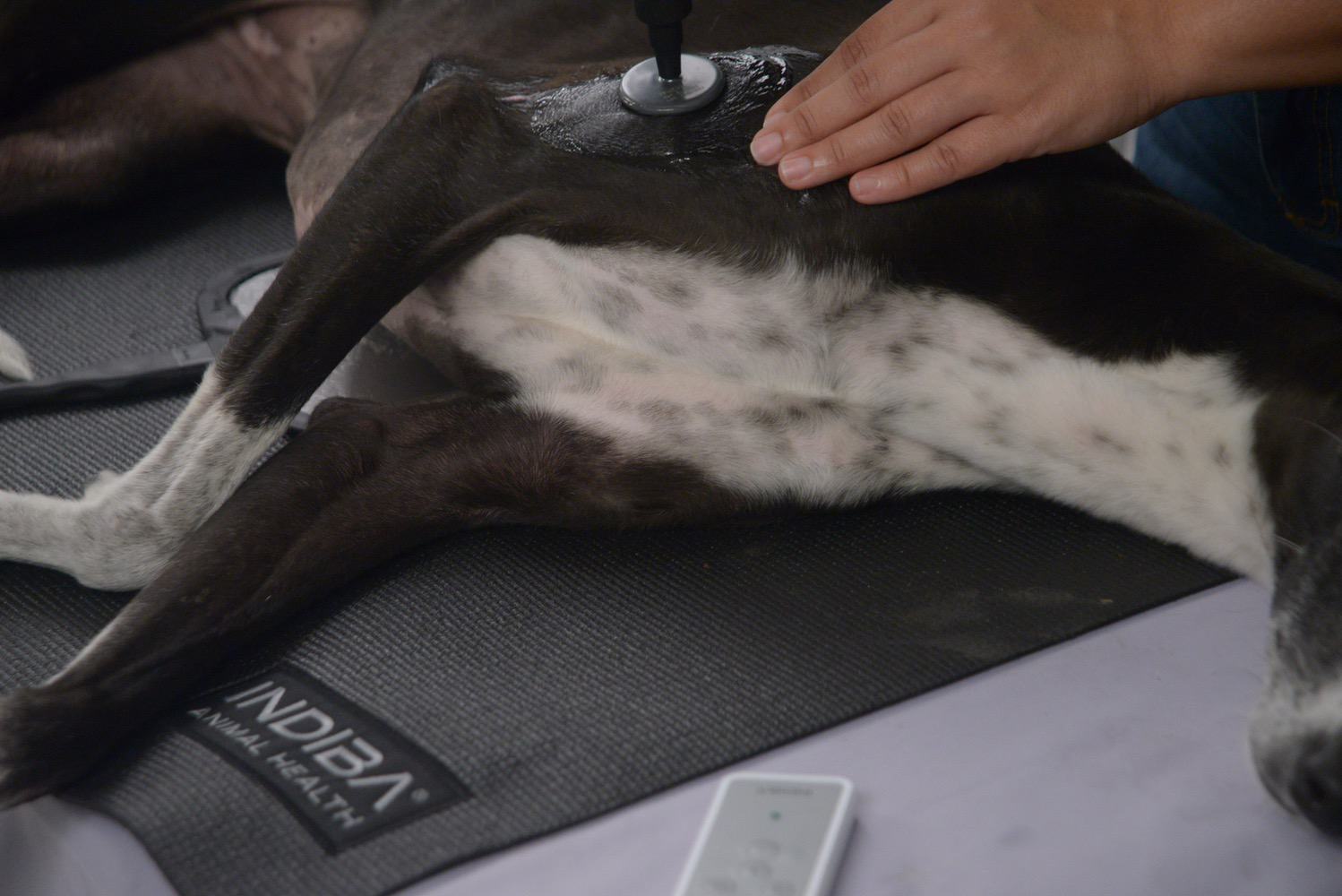
We help dogs return to fitness after injuries, surgery and in chronic musculoskeletal conditions. At the Multivet Active centre near Wrocław we combine the water treadmill, INDIBA therapy, manual therapy and exercise into one individually tailored recovery plan.
What does dog rehabilitation involve?
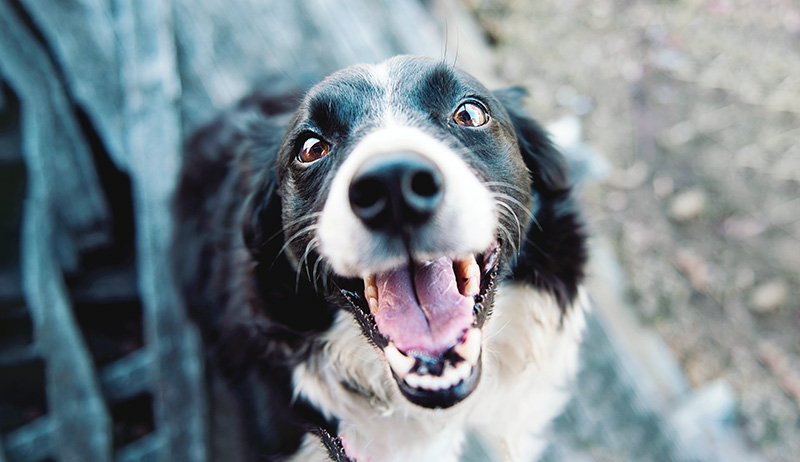
Dog rehabilitation is a planned process of restoring mobility - not a single treatment. We start with a functional assessment of the patient: we check the gait, joint range of motion, muscle strength and symmetry and responses to touch. On this basis we choose methods and design an individual programme that changes as the dog progresses. The goal is a return to pain-free, correct movement and, in chronic patients, keeping comfort and mobility for as long as possible.
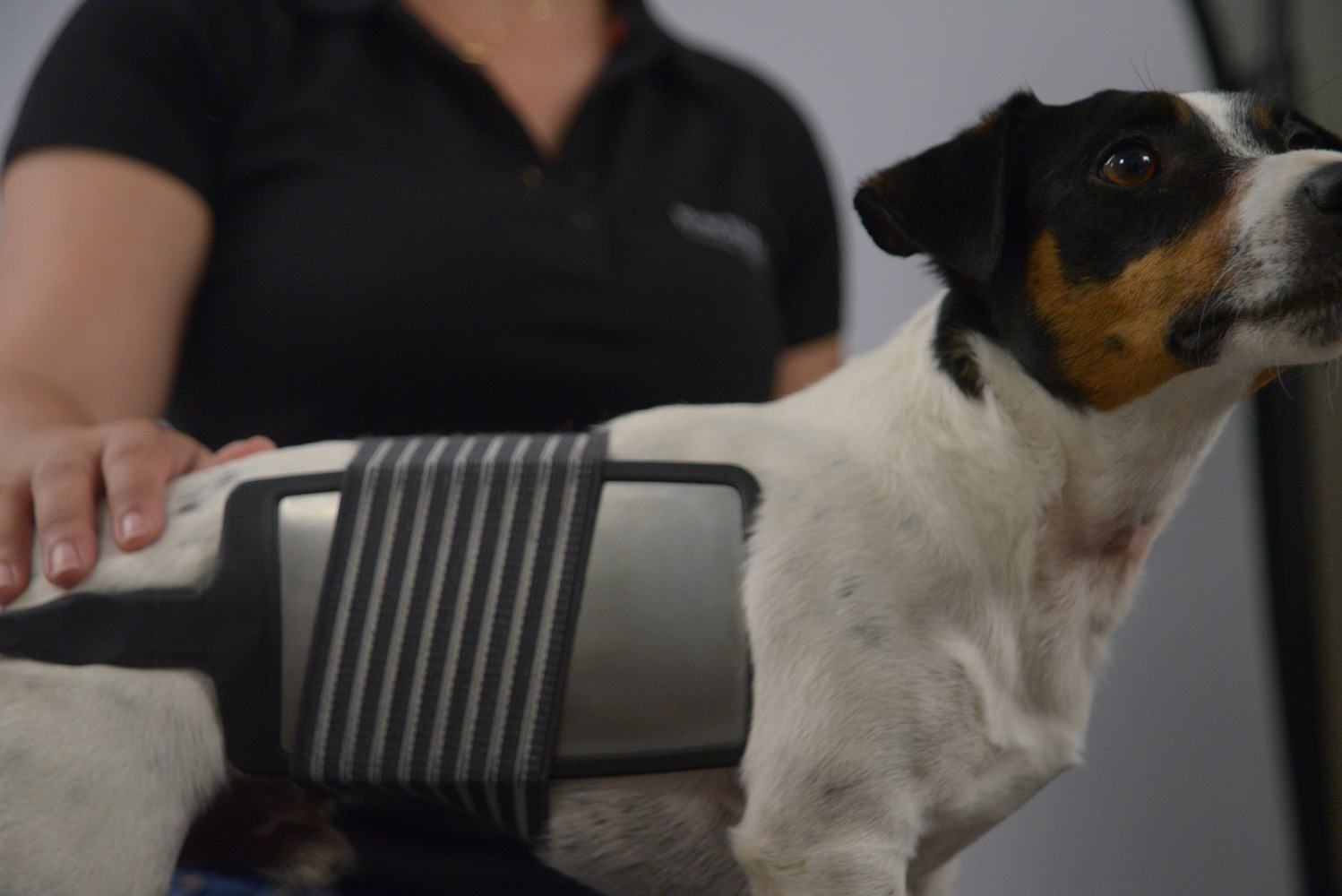
When does a dog need rehabilitation?
Rehabilitation benefits dogs of every age - from young patients to seniors.
After cruciate ligament surgery
A return to full fitness after knee surgery (e.g. the TPLO method). Learn more
Joint dysplasia
Support in hip and elbow dysplasia - less pain, more movement. Learn more
Disc disease & neurology
Gait re-education in paresis and spine problems. Learn more
Degenerative joint disease
Improving a dog’s quality of life in arthrosis and chronic pain. Learn more
Weight & fitness
Safe training supporting weight reduction and muscle building.
Sporting dogs & seniors
Injury prevention, recovery after exertion and maintaining fitness. Learn more
How dog rehabilitation works
From the first assessment to home exercises - we guide you through the whole process.
Functional assessment
Interview, assessment of gait, range of motion and muscle strength.
Therapy plan
Choosing methods: water treadmill, INDIBA, exercise.
Sessions & monitoring
Regular sessions and assessment of the patient’s progress.
Home exercises
Owner coaching that consolidates the results of therapy.
Frequently asked questions about dog rehabilitation
When should a dog start rehabilitation?
After orthopaedic and neurological surgery, in dysplasia, disc disease and degenerative joint disease, and also when a dog limps, is reluctant to move, is overweight or is a senior. Rehabilitation is also worth considering for sporting dogs as injury prevention.
How long does dog rehabilitation after surgery take?
It depends on the type of procedure and the patient. We usually spread the programme over several weeks of regular sessions and adjust its course to the dog’s progress and the attending vet’s recommendations.
Does dog rehabilitation hurt?
We carry out therapy so that it is comfortable and stress-free. We match intensity and techniques to the patient’s tolerance, and one of the goals of rehabilitation is precisely to reduce pain.
Where do you provide dog rehabilitation near Wrocław?
The Multivet Active centre is located at ul. Kościuszki 61 in Lutynia, just outside Wrocław, with easy access from the city and the surrounding area - including Miękinia, Kąty Wrocławskie and Środa Śląska.
What owners say
After cruciate ligament surgery our labrador would not put weight on the leg. Water treadmill sessions spread over several weeks brought his normal walks back.
I was afraid our cat would not tolerate any therapy. He was handled calmly, without force and at his own pace - after a course of treatments he stopped guarding the leg.
Our dog has hip dysplasia. Regular physiotherapy and the home exercises we were shown and given in writing clearly improved her mobility.
Book rehabilitation for your dog
We will help choose a recovery programme tailored to your dog’s needs. Get in touch with the Multivet Active centre near Wrocław.