INDIBA therapy for animals in Wrocław
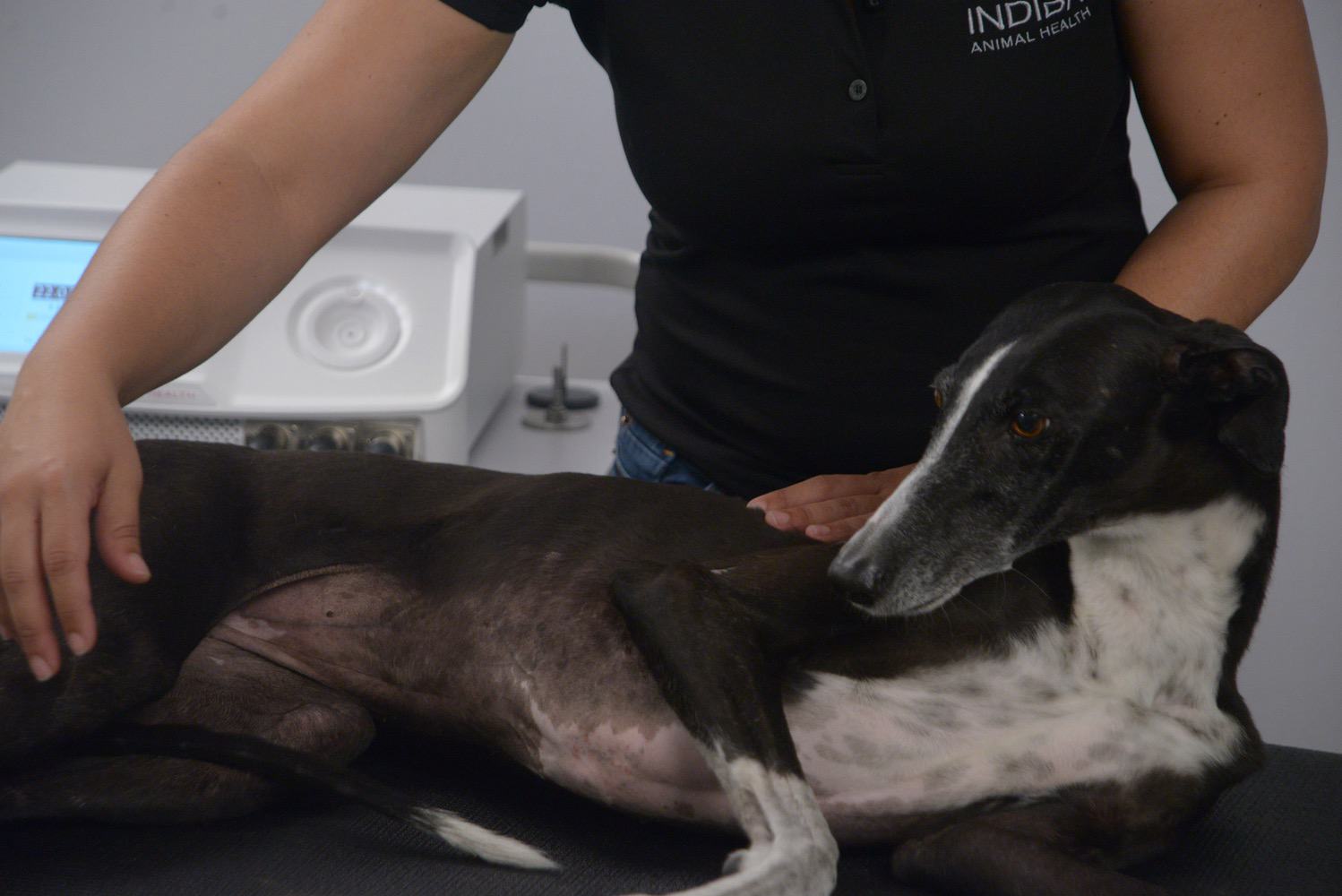
INDIBA Animal Health is a non-invasive technology that supports the body’s natural tissue-repair processes. At the Multivet Active centre near Wrocław we use it for musculoskeletal complaints, tendon and ligament problems and in recovery after surgery.
How does INDIBA therapy work?
INDIBA Animal Health uses a constant frequency of 448 kHz (Proionic® System). In a controlled way it stimulates microcirculation, ion exchange and cellular metabolism. In practice this means better oxygenation and nourishment of tissues, faster drainage of swelling and less tension and pain.
Depending on the stage of the problem we work atermally or with a controlled thermal effect. This allows the therapy to support comfort, tissue function and the patient’s recovery.
Constant 448 kHz frequency
The patented Proionic® System with documented effects.
Atermal or thermal mode
Settings matched to the stage of the problem and tissue response.
Patient comfort
A non-invasive treatment, usually well tolerated by animals.
When to consider INDIBA therapy
We always plan the therapy based on a veterinary assessment and the goal of rehabilitation.
Musculoskeletal complaints
Support for pain, tension and overload of the locomotor system.
Tendon and ligament problems
Help with tissue regeneration after injuries and overload.
Recovery after surgery
Support for anti-swelling processes and peri-operative healing.
Working with swelling
Supporting drainage and reduction of tissue swelling.
Scar tissue
Supporting the flexibility and mobility of scars and adhesions.
A complement to rehabilitation
Often part of a recovery plan with manual therapy and exercise.
Frequently asked questions about INDIBA
Can INDIBA be combined with other rehabilitation?
Yes, it is often part of a recovery plan - e.g. alongside manual therapy and exercise - as indicated.
Is a qualifying assessment required?
Yes - a qualifying assessment is required. As with any physical therapy there are contraindications, so we perform treatments only after an in-clinic assessment.
Does the animal need anaesthesia?
Usually not; what matters is a calm patient and comfort in the clinic. The therapy is non-invasive and we adjust the settings to the patient’s response.
How many sessions are needed?
We tailor the number and frequency of sessions individually to the patient’s response and abilities and to the goal of rehabilitation.
What owners say
After cruciate ligament surgery our labrador would not put weight on the leg. Water treadmill sessions spread over several weeks brought his normal walks back.
I was afraid our cat would not tolerate any therapy. He was handled calmly, without force and at his own pace - after a course of treatments he stopped guarding the leg.
Our dog has hip dysplasia. Regular physiotherapy and the home exercises we were shown and given in writing clearly improved her mobility.
Book an INDIBA qualifying assessment
Get in touch with the Multivet Active centre near Wrocław to arrange a therapy plan tailored to your pet.